How to Choose a Compact Stackable Washer Dryer?

A compact stackable washer dryer can reclaim a narrow closet, a kitchen corner, or the end of a hallway. But “compact” does not mean one-size-fits-all. Measure the alcove, doorway, and full delivery route; then check the appliance’s installed depth, door swing, hookups, and venting requirements. A few inches matter. So does the path upstairs.

ENERGY STAR reports that certified clothes washers use about 20% less energy and 30% less water than standard models. That is useful context, not a promise that every compact unit will save the same amount in your home. Compare capacity, cycle times, noise, warranty terms, and whether the dryer is vented or ventless. ENERGY STAR ratings and manufacturer specifications can help verify performance claims. One limitation deserves attention: stacked pairs and all-in-one units may look similarly space-efficient, yet their installation needs and laundry routines can differ sharply. Before choosing, consider how often you wash bulky bedding and whether a smaller drum would create extra loads.

A named expert quotation should be verified against its original source. No verifiable quote was provided here, so attributing one would risk inventing a statement. Use this guide to compare models carefully—and measure twice before ordering.
How to Choose a Compact Stackable Washer Dryer?

Assess Your Laundry Needs and Available Installation Space

Choosing a compact stackable washer dryer starts with laundry habits, not cabinet dimensions. Count loads over one ordinary week, including towels, bedding, and sportswear. A two-person household may need less capacity than a family with young children.

ENERGY STAR reports that certified clothes washers use about 20% less energy and 30% less water than standard models. Frequent washing makes those differences meaningful.

Measure the installation area three times. Record width, depth, and height, then include hoses, plugs, doors, and service clearance. A unit may fit on paper but block a hallway when its door opens.

The U.S. Department of Energy’s appliance guidance stresses proper installation and airflow, especially for drying performance. Ventless models still need a suitable drain and electrical connection. Check these points before delivery.

Think about movement, too. Can the machine pass through the entrance, stairs, and bathroom door? Is the floor level enough for stable spinning?

A small tape-measure mistake can become an expensive repair. I would not rely on the listed depth alone; rear connections often add several centimeters.

My less-than-perfect rule is simple: measure the tightest route, not just the final corner. Leave a little space for hands, tools, and future maintenance.

Compare Unit Dimensions, Capacity, and Stacking Configuration

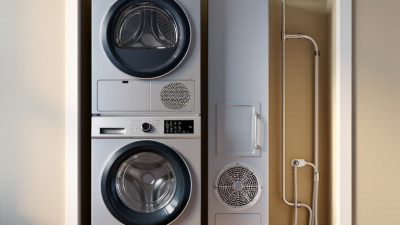
A compact stackable washer dryer can save floor space, but the measurements need to work as a pair. Measure the installation area at floor level and near the ceiling. Include room for hoses, vents, door swings, and any uneven walls. A unit that fits on paper may still be awkward to load when a door hits a nearby cabinet.

Compare capacity with your usual laundry, not just the advertised drum size. A larger washer can be useful for towels or bedding, but the dryer must handle the load comfortably. Check the manuals for approved stacking requirements, compatible dimensions, and whether a separate stacking kit is needed. Keep controls reachable, and leave enough clearance for airflow and service access. Small details matter.

Tips: Measure the full route into the room, including stairs and narrow doorways. Use painter’s tape to mark the footprint, then open nearby doors. Check floor stability and appliance depth with hoses attached. It’s easy to overlook that last part. If the layout feels tight, reconsider before ordering.

Evaluate Washing and Drying Performance for Your Household

How to Choose a Compact Stackable Washer Dryer?

Choosing a compact stackable washer dryer should begin with real laundry, not cabinet measurements alone. Evaluate washing and drying performance as one system. A 7 kg washer may pair with a 4 kg dryer, so a full wash load may need splitting. That matters for towels, bedding, and sports clothing. Check the spin speed and water extraction rating. Better extraction usually leaves less moisture for the dryer to remove. However, faster spinning can crease delicate shirts and increase noise in a small apartment. Listen if possible.

Drying sensors can stop the cycle when clothes reach the selected dryness level. This may protect fabrics and reduce wasted energy. Timed drying offers control, but it can leave thick towels damp or make cotton overly hot. A practical test uses a mixed load with shirts, towels, and trousers. Check whether items dry evenly, rather than judging one small garment. Review the energy label, cycle duration, filter access, and user manual before buying. I once focused too heavily on washing capacity. The dryer capacity caused more daily inconvenience.

Tips: Leave space around the unit for ventilation and maintenance. Clean the lint filter after every drying cycle. Avoid packing the drum tightly. Clothes need room to tumble. Use a lower heat setting for delicate fabrics, and compare results after several loads. A quiet machine can still vibrate if the floor is uneven. Check that installation requirements suit your home.

How to Choose a Compact Stackable Washer Dryer

Compare typical compact-unit drum capacities with the size of your household’s laundry loads. Capacity figures are approximate examples, not universal standards; always check the specifications for the models you are considering.

Compact washers commonly offer around 2.0–2.5 cubic feet of capacity, while compact dryers often provide about 3.5–4.5 cubic feet. A larger dryer drum can help laundry tumble more freely, but drying performance also depends on load size, fabric type, venting, and cycle settings.

Check Venting, Utility Connections, Energy Use, and Controls

Choosing a compact stackable washer dryer begins with the space behind the machine. I once measured the cabinet width but forgot the door swing. That small mistake affected daily loading. Leave room for hoses, ventilation, and service access. Check whether the dryer needs an external vent. Vented models require a clear duct route, while ventless models need proper airflow around the unit. Never assume an existing opening meets local requirements. A qualified installer should verify it.

Utility connections deserve equal attention. Most compact units need a grounded electrical outlet, water supply lines, and a reliable drain. Some models require a dedicated circuit or a different voltage. Confirm these details before delivery. The drain hose should reach the standpipe without sharp bends. Water shutoff valves should remain easy to reach. I have seen installations where the machine fit perfectly, but the outlet sat behind the cabinet. That mistake made maintenance frustrating.

Energy use can vary widely between cycles. Compare the energy label, estimated annual consumption, and drying time. A heat-pump dryer may use less electricity, but its cycles can feel slower. That trade-off matters in busy homes. Controls should be readable, responsive, and simple to operate with wet hands. Look for clear temperature settings, delay options, and useful error messages. Try the controls in a showroom if possible. Small screens sometimes look impressive but become confusing after installation.

How to Choose a Compact Stackable Washer Dryer? — Check Venting, Utility Connections, Energy Use, and Controls

Selection Dimension What to Check Typical Details Practical Buying Guidance
Overall size and clearance Measure the installation area, doorway, hallway, and the space needed to open the doors. Compact laundry units are commonly around 24 inches wide. Height and depth vary by model; hoses, cords, and door clearance add to the required space. Use the manufacturer’s installation dimensions, not just the product’s cabinet dimensions. Confirm that the unit can pass through the delivery route.
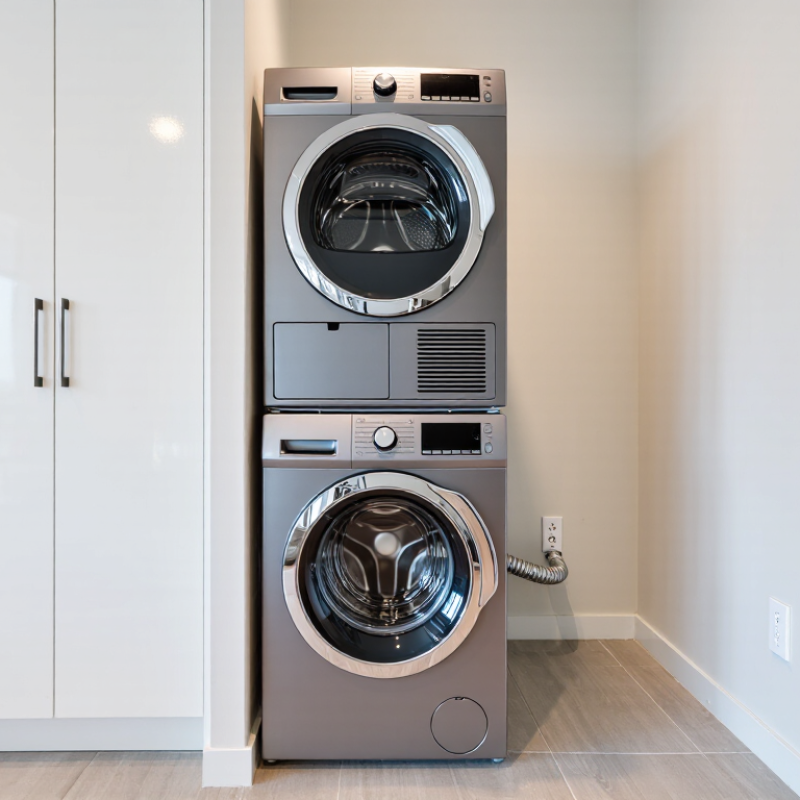
Stacking setup Check whether the washer and dryer are designed to stack and whether a compatible stacking kit is required. A stacking kit secures the dryer above the washer. Stacked controls may sit higher than controls on a side-by-side installation. Use the specified kit and follow the installation instructions. Make sure the floor is level and can support the combined load.
Dryer venting Identify whether the dryer is vented or ventless, and check the required exhaust route. Vented dryers need an exhaust duct leading outdoors. Ventless condenser dryers collect or drain moisture; heat-pump dryers recirculate air and typically do not need an outdoor exhaust duct. Choose a vented model only if a suitable outdoor vent is available. For apartments or locations without an exhaust route, check local rules and consider a ventless model.
Water connections Check the hot- and cold-water supply valves, hose reach, and drain location. Most washers connect to household water supplies and discharge through a drain hose. Some models have different water-connection requirements. Confirm the connection details in the installation manual and inspect the valves and drain before delivery. Avoid kinked hoses and insecure drain-hose placement.
Electrical supply Verify the required voltage, circuit, plug, and outlet location for each appliance. Compact washers and dryers may have different electrical requirements. Some dryers require a dedicated circuit; requirements depend on the model and local electrical standards. Read the appliance rating label and installation guide before purchase. Have a qualified electrician assess the circuit if the outlet or supply does not match.
Washer capacity Compare drum capacity with household laundry volume and the items you wash most often. Compact washers generally have less capacity than full-size machines. Bulky bedding may not fit or clean effectively in a small drum. Consider the dryer capacity too: the dryer should be able to handle the washer’s typical load, often with space for clothes to tumble freely.
Energy and water use Review the current EnergyGuide label and any applicable efficiency certification for the exact model. Efficiency varies by model, cycle, load size, and drying technology. Heat-pump dryers are generally designed to use less energy than conventional electric resistance dryers, but cycle times and purchase costs can differ. Compare labeled annual energy estimates for models in the same category. Use appropriate load sizes and high-spin washer settings to reduce moisture left for the dryer.
Controls and cycles Check the readability of the panel, available cycles, cycle settings, and any accessibility features. Common options include normal, delicate, quick, rinse, and temperature or spin adjustments. Controls may be touch-based, dial-based, or a combination. Choose controls that are easy to reach in the stacked position. Confirm that essential settings are straightforward and that cycle names match your laundry needs.
Noise and vibration Consider nearby bedrooms, shared walls, flooring, and the machine’s installation requirements. Noise depends on the machine, load balance, spin speed, floor, and installation. Vibration can increase if the washer is not level or the load is uneven. Check the specified noise information if available, level the washer carefully, and follow guidance on floor support and vibration control.
Maintenance and service access Check filter-cleaning instructions, lint management, drain access, and access to valves and plugs. Ventless dryers may need regular condenser or filter cleaning. Vented dryers require a clear exhaust path and periodic duct cleaning. Leave the service clearances specified in the manual and ensure shutoff valves, filters, and the electrical disconnect remain accessible.

Confirm Installation Requirements, Service Access, and Warranty Coverage

How to Choose a Compact Stackable Washer Dryer?

Confirm the installation requirements before comparing cycles or capacity. Measure width, depth, and ceiling height, including hose bends and door swing. Leave service clearance around the stacked unit. A tight closet can turn a simple repair into wall removal.

Verify the electrical outlet, drain height, water shutoff, and dryer vent requirements. Ventless models still need airflow and drainage. ENERGY STAR reports that certified clothes washers use about 20% less energy and 30% less water than standard models. Efficiency matters, but only after safe installation.

Service access deserves equal attention. Choose a layout that keeps the filter, pump, rear connections, and control panel reachable. Ask whether technicians can remove the dryer without dismantling cabinets. Small details matter.

NAHB’s 2024 buyer-preference report identified laundry rooms as desirable to 86% of surveyed buyers, but compact spaces often sacrifice access. I have seen owners regret choosing maximum capacity over repair clearance.

Check the warranty’s parts and labor periods, service territory, installation exclusions, and required maintenance records. Confirm who handles sealed-system or motor repairs. Read the actual warranty, not only the sales summary. A longer warranty may still provide weak coverage if labor is excluded. Keep the receipt, model number, and installation photos. You may need them later.