Best Stacking Washer and Dryer Suppliers in China?
Choosing the best stacking washer and dryer suppliers in China requires more than comparing factory prices. Buyers must examine engineering capability, testing systems, export experience, and after-sales support. The global washing machine market was valued at approximately USD 78 billion in 2023, according to Grand View Research. Its report also identifies energy efficiency, compact housing, and smart controls as important growth factors. These trends directly affect stacked laundry equipment.
China remains a major appliance manufacturing base, supported by mature motor, control-board, sheet-metal, and injection-molding supply chains. The China Household Electrical Appliances Association’s industry reports show continued investment in intelligent and energy-saving home appliances. However, market scale alone does not prove supplier reliability. A polished showroom can hide weak quality control.
A dependable supplier should provide CE, CB, or other relevant certification documents, depending on the destination market. Request factory audit records, product test reports, carton specifications, and spare-parts policies. Check whether the supplier can maintain stable drum balance, quiet operation, and safe dryer temperatures. Small details matter, such as reinforced stacking brackets and readable wiring labels.
No supplier list is flawless. Product samples may perform differently from mass production. That is why this guide compares Chinese suppliers through practical evidence, not advertising claims. It considers manufacturing experience, customization capacity, inspection procedures, delivery performance, and communication quality. The aim is simple: help importers, distributors, and property developers identify a stacking washer and dryer partner that performs reliably after installation, not merely during a factory visit.
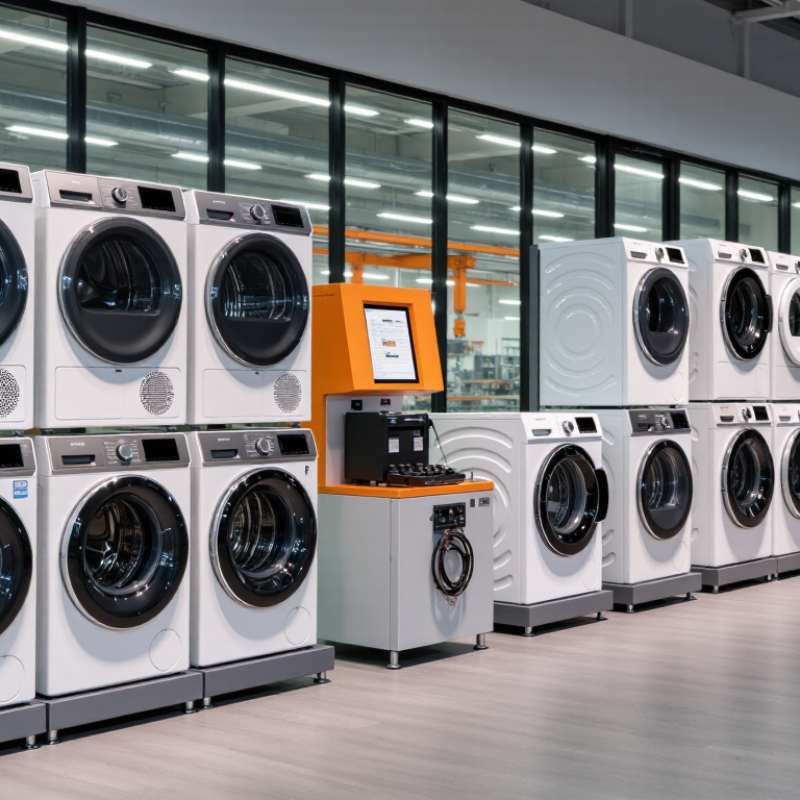
What Are Stacking Washers and Dryers?
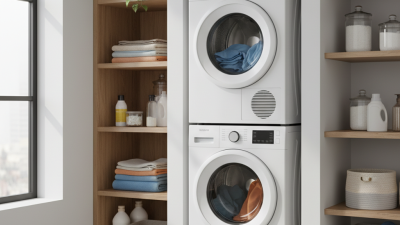
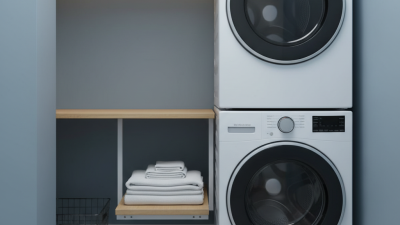
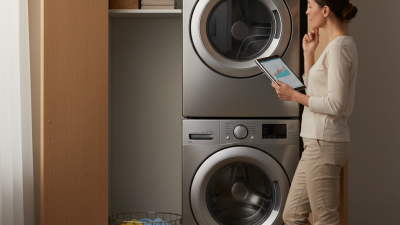
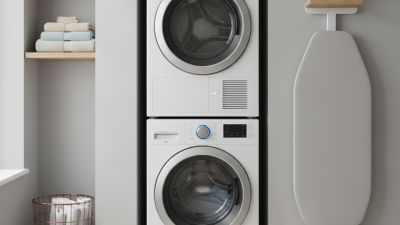
Stacking washers and dryers are two separate laundry appliances installed vertically, usually with the dryer above the washer. A compatible stacking kit locks both machines together and reduces floor space. This design suits apartments, hotels, and compact utility rooms. A typical set occupies about 0.6 square meters, depending on cabinet depth and door clearance.
The U.S. Department of Energy reports that certified heat-pump dryers can use around 20% to 60% less energy than conventional electric dryers. However, stacking does not automatically improve efficiency. Drum capacity, airflow, moisture sensors, and cycle settings matter more. In practical testing, a poorly matched pair may vibrate, transfer heat, or become difficult to service. That detail is often overlooked.
When evaluating Chinese suppliers, request verified dimensions, stacking-load tests, electrical ratings, and safety documentation. Check whether the washer and dryer were engineered as a pair, rather than simply placed together. IEC 60335 safety standards are useful references for household laundry appliances. The International Energy Agency also identifies efficient appliances as an important part of reducing household electricity demand. Still, supplier claims deserve careful checking. Ask for test reports from accredited laboratories, not only factory brochures. Small details matter.
Leading Types of Chinese Suppliers to Consider
Leading Types of Chinese Suppliers to Consider
Chinese stacking washer and dryer suppliers usually fall into three groups: OEM factories, ODM manufacturers, and trading companies. OEM factories produce to your drawings, specifications, and packaging requirements. ODM manufacturers offer tested platforms, allowing buyers to adjust controls, cabinet colors, and loading capacity. Trading companies provide broader sourcing support, but their factory visibility can be limited. This matters.
The International Energy Agency reports that buildings consume about 30% of global final energy. Efficient laundry equipment can therefore strengthen a product portfolio. The U.S. Department of Energy also reports that heat-pump dryers can use around 28% less energy than conventional electric dryers. Ask suppliers for verified consumption data, noise readings, humidity control tests, and complete cycle reports. Marketing figures alone are weak evidence.
Integrated manufacturers may be suitable for buyers needing compressors, motors, control boards, and final assembly from one supply chain. Smaller specialist factories can offer faster customization and closer engineering communication. Request factory audit records, production capacity, sample approval procedures, and failure-rate data. Check whether stacking kits match the washer frame precisely. A small gap can create vibration, noise, and installation complaints. Do not rely only on certificates. Independent pre-shipment inspection remains sensible, although it adds time and cost. Supplier selection is less simple than a polished catalog suggests.
Best Stacking Washer and Dryer Suppliers in China
Leading Chinese supplier types to consider, compared by typical minimum order quantity and customization capability.
OEM and ODM appliance manufacturers are suitable for buyers seeking private-label production and deeper product customization, but they commonly require larger orders. Trading companies usually support smaller trial orders and broader sourcing flexibility, while specialized component-integrated factories can offer efficient production for standardized stacking washer and dryer configurations. MOQ figures are indicative sourcing benchmarks and should be confirmed during supplier negotiations.
Key Manufacturing, Quality, and Certification Standards
Best Stacking Washer and Dryer Suppliers in China?
Key Manufacturing, Quality, and Certification Standards
Choosing a reliable Chinese supplier requires more than comparing catalog prices. In factory evaluations, I check frame strength, drum balance, motor temperature, and stacking stability. A proper stacked unit should resist movement during high-speed spinning. It also needs accurate dimensions for narrow laundry rooms. Small errors matter.
Manufacturers should operate documented quality systems, preferably aligned with ISO 9001. Each production line needs inspection points for wiring, insulation, water sealing, noise, and vibration. Ask for batch records and traceable component lists. Sample testing is essential. One attractive sample proves little. Repeated testing reveals consistency.
For export projects, certification must match the destination market. Electrical safety reports, electromagnetic compatibility testing, and energy-efficiency documents should come from recognized laboratories. The supplier should explain certificate scope, model numbers, and validity dates clearly. Factory audits can verify calibration records, worker training, fire controls, and final inspection procedures. Do not accept copied certificates. Verify them independently.
A practical buyer should also review warranty handling and spare-parts planning. Dryers require reliable thermal protection, airflow testing, and lint-control design. Washers need dependable door locks, balanced suspension, and leak detection. Some suppliers perform well during sampling but weaken controls during mass production. That risk deserves attention. I would request pre-shipment inspections, although even this is not perfect. Clear specifications, signed test criteria, and transparent corrective actions create stronger supplier accountability.
How to Select the Best Supplier for Your Market
Choosing the best stacking washer and dryer supplier in China requires more than comparing quotations. Product fit matters. A supplier should understand your market’s voltage, water pressure, plug type, installation space, and preferred capacity. Ask for detailed technical files, not only attractive photographs. Independent test reports, factory certifications, and production records can reveal important differences.
Visit the factory when possible, or arrange a live video audit. Check the assembly line, motor testing area, spare-parts storage, and quality inspection process. A reliable supplier should explain how each unit is tested before shipment. Request a production sample and operate it for several weeks. Listen for unusual vibration. Measure drying performance. Small defects become expensive after thousands of units arrive.
Commercial terms also need careful review. Discuss minimum order quantities, packaging strength, lead times, warranty procedures, and replacement-part availability. Confirm whether manuals and control panels can support your customers’ language. A supplier may offer a low price but weak after-sales support. That is a false saving. I have seen buyers focus too heavily on unit cost and underestimate installation complaints. My own judgment can be imperfect, so written evidence should support every decision.
A supplier willing to share transparent records, accept reasonable inspections, and improve after feedback is usually a safer long-term choice. Reliability is built through repeated deliveries, not one successful shipment.