Packaging buyers are demanding more than protection. They want shelves to communicate quality within seconds. A Holographic Foil Machine can support that goal by adding moving light, depth, and reflective detail to cartons, labels, gift boxes, and premium paper products.
The commercial case is connected to broader packaging growth. Grand View Research reported that the global flexible packaging market was valued at about USD 291.82 billion in 2022, with projected growth through 2030. Smithers’ The Future of Global Printing to 2028 also identifies packaging as a major driver for printing demand. These reports do not measure holographic foil equipment directly. However, they show why converters are investing in higher-value decoration and shorter production cycles.
The visual effect is immediate.
In practice, machine selection requires more than checking maximum speed. Operators must examine foil tension control, registration accuracy, heating stability, substrate compatibility, waste rates, and maintenance access. A carton may look impressive under showroom lighting, yet fail if the foil wrinkles around a crease. That assumption can be wrong.
A well-configured Holographic Foil Machine may help printers reduce outsourcing, create distinctive finishes, and respond faster to customized orders. Its value depends on actual job volume, artwork complexity, and operator skill. Research from PMMI and drupa repeatedly highlights automation, efficiency, and cost control as important investment priorities. Still, no machine guarantees profit. A careful buyer should test real substrates, measure setup waste, compare energy use, and calculate payback using verified production data.
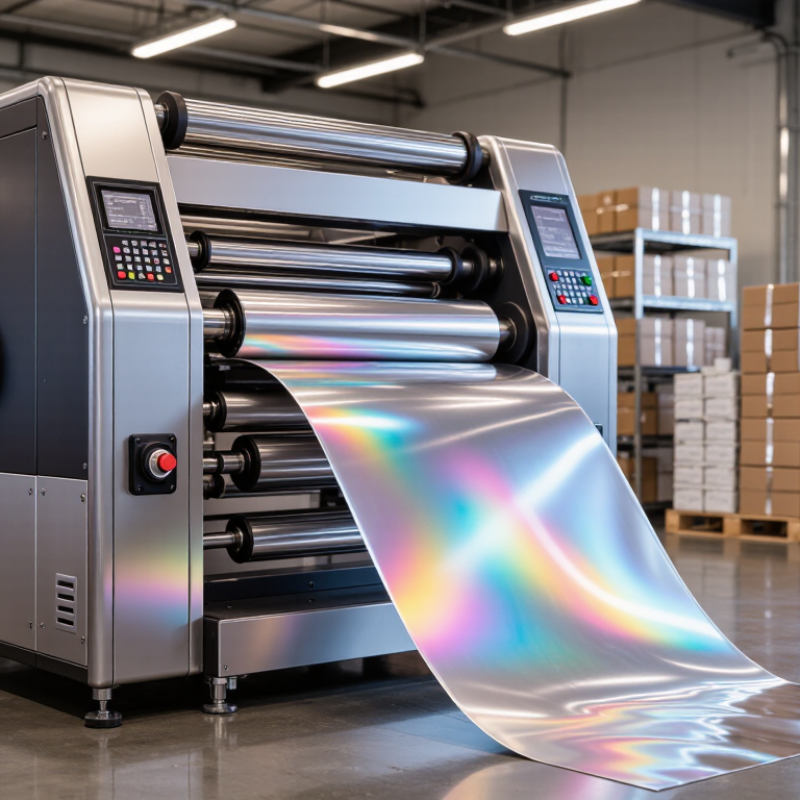
A holographic foil machine is industrial converting equipment that transfers a micro-embossed foil layer onto paper, board, labels, or films. It uses controlled heat, pressure, and precise registration. Some systems use hot stamping; others use cold-foil adhesive and curing. The rainbow effect is not a projected image. It is a patterned optical surface. During production, a heated die or adhesive pattern bonds the foil while rollers maintain contact. Web tension and temperature matter. Small errors can create dull patches, wrinkles, or shifted patterns. That detail is often underestimated.
Grand View Research estimates that the global holographic films market was valued at approximately USD 11 billion in 2023, with continued growth expected through 2030. Smithers’ industry analysis also identifies packaging embellishment as a practical route to stronger shelf visibility. These figures suggest demand, but they do not guarantee a profitable purchase. A business should examine substrate compatibility, output speed, foil waste, energy use, and operator training. A machine may run quickly on a test sheet yet struggle with thin recycled board. That assumption is too neat. In real production, registration drift can appear after hours of continuous running. Trial samples, measurable defect rates, and maintenance records provide more reliable evidence than a glossy demonstration. The right machine is the one that remains stable during ordinary shifts, not only during showroom tests.

Why Choose a Holographic Foil Machine for Your Business?
How Does a Holographic Foil Machine Work?
A holographic foil machine transfers a micro-pattern onto paper, film, or coated board. The process uses controlled heat, pressure, and precise registration. First, the machine unwinds a thin foil roll. A heated cylinder or die presses the foil against the substrate. Its release layer separates, leaving a reflective holographic image behind. Cooling then helps stabilize the transferred pattern.
The result can resemble moving light under a shop lamp. Small changes in viewing angle create shifting colors and depth. This effect can improve shelf visibility and support product authentication. Smithers reported that the global packaging market could exceed 1.2 trillion US dollars by 2028. That growth increases demand for distinctive, efficient finishing methods. However, holographic transfer is not automatically perfect. Uneven pressure, dusty surfaces, or incorrect temperature can create dull patches and broken images.
Tips: Test three foil temperatures before production. Check pressure across the full sheet. Use a clean, level substrate. Record speed, temperature, and waste rates. Small adjustments matter.
A practical operator should also inspect foil tension during every run. Excessive tension may distort registration. Low tension can cause wrinkles. The machine should match the substrate width and coating type. The International Organization for Standardization describes registration control as essential for consistent printed results. Still, real production can be less predictable than a manual sample. I would leave time for calibration, especially during the first shift.
A holographic foil machine can make ordinary packaging look more valuable within seconds. Its shifting colors catch light as customers move past a shelf. This visual movement can improve product recognition in crowded retail displays. It also creates a more tactile experience when applied to cartons, labels, invitations, or premium documents.
The business benefit is not decoration alone. Holographic foil can support clearer product differentiation and stronger perceived quality. A controlled foil pattern may highlight a logo, border, batch area, or key message. Some applications can also add visible design features that help teams inspect packaging more easily. However, it is not a magic sales button. Results depend on foil quality, artwork, substrate, machine settings, and finishing accuracy.
Production efficiency matters too. Digital or short-run systems can reduce the need for large minimum quantities. Businesses may test seasonal designs without storing excessive printed stock. Operators should still measure setup waste, temperature stability, pressure, and registration during a real production trial. Small errors show quickly. A misaligned foil edge can weaken an otherwise polished package. Training, routine cleaning, and careful material selection protect consistency over time. The strongest return often comes from using holographic effects selectively, rather than covering every available surface.
| Business Dimension | Typical Data or Operating Range | Business Benefit | Practical Consideration |
|---|---|---|---|
| Visual impact | Holographic effects can produce diffraction-based color shifts, movement effects, and multi-angle reflections. | Helps packaging, labels, certificates, and promotional materials attract attention at the point of sale. | The final appearance depends on artwork, foil pattern, substrate color, stamping pressure, temperature, and registration accuracy. |
| Security and authentication | Visible optical features can be combined with serialized numbers, microtext, covert images, or machine-readable elements. | Increases the difficulty of producing visually similar counterfeit materials and supports rapid visual inspection. | Holographic foil is a deterrent, not a complete anti-counterfeiting system. Layered security features are recommended for high-value products. |
| Compatible applications | Common applications include paperboard cartons, paper labels, certificates, book covers, greeting cards, and selected synthetic films. | Allows one finishing technology to serve multiple product categories and marketing campaigns. | Substrate surface energy, coating, texture, and heat resistance should be tested before production. |
| Hot-foil operating temperature | Many hot-stamping applications operate approximately within 90–150 °C, depending on foil, substrate, tooling, and machine settings. | Provides a controllable process for transferring metallic or holographic layers onto suitable materials. | The correct temperature must be established through trials; excessive heat may distort the substrate or reduce image quality. |
| Production flexibility | Foil can be applied as full coverage, spot decoration, registered patterns, borders, logos, text, or variable design elements. | Supports premium editions, seasonal packaging, limited releases, and targeted brand campaigns without changing the entire product structure. | Registered effects require accurate artwork preparation, tooling, web control, and alignment. |
| Material efficiency | Spot application uses foil only where the design requires it; waste levels depend on layout, web width, repeat length, and machine setup. | Can reduce unnecessary decorative coverage and help control material consumption in suitable designs. | Actual waste should be measured from foil roll usage, setup waste, trim waste, and rejected sheets or labels. |
| Equipment integration | Depending on the machine configuration, holographic foil units may be integrated with printing, die-cutting, laminating, or standalone finishing workflows. | Can reduce handling between production stages and create additional value from existing converting capacity. | Check available working width, substrate thickness, line speed, registration controls, tooling compatibility, and operator requirements. |
| Product positioning | Reflective and tactile finishing is commonly associated with premium packaging, promotional print, collectibles, and formal documents. | Supports premium positioning and may help justify higher-value product lines when the design and target market support it. | A premium finish does not guarantee higher sales; effectiveness should be evaluated through customer response and production economics. |
| Quality control metrics | Recommended checks include adhesion, image completeness, registration, surface scratches, color consistency, blocking, and rub resistance. | Creates measurable acceptance criteria and helps reduce customer complaints and production rework. | Testing should be performed on the actual substrate and under the intended storage, handling, and finishing conditions. |
| Investment evaluation | A basic payback model is: payback period = total equipment investment ÷ monthly incremental gross profit. | Provides a practical way to compare equipment ownership with outsourcing or adding a finishing surcharge. | Include tooling, foil, maintenance, labor, electricity, setup waste, training, financing, and expected utilization in the calculation. |
Note: Operating ranges are indicative industry values rather than guaranteed machine specifications. Final results depend on the selected foil, substrate, artwork, tooling, machine configuration, and process settings.
Holographic foil machines serve several industries, especially where packaging must attract attention and resist imitation. Smithers’ industry analysis identifies packaging, labels, publishing, and security printing as major holography applications. Food, beverage, cosmetics, and personal-care producers use foil on cartons, caps, sleeves, and promotional labels. Under retail lighting, fine rainbow movement can make a small package look more distinctive.
Pharmaceutical packaging also uses holographic effects for authentication features and visible tamper evidence. However, foil alone does not prove product safety. It must support controlled artwork, traceable production, and inspection procedures. Grand View Research valued the global packaging market at approximately US$1.14 trillion in 2023, with continued growth expected through 2030. That scale creates room for inline and offline holographic foil equipment. Yet, the right machine depends on substrate, foil width, speed, registration accuracy, and waste tolerance. Small cosmetic runs may need flexibility more than maximum speed. Large beverage-label operations may prioritize stable feeding and continuous output.
Publishing and premium stationery remain useful niches. Covers, certificates, invitations, and collectible cards can gain depth from selective foil areas. The result is not always perfect. Wrinkles, uneven pressure, and poor temperature control can weaken the visual effect. Operators should test actual materials before purchasing equipment, because coated paper and flexible film behave differently. A machine can create impressive effects, but process discipline creates reliable results.
Choosing the right holographic foil machine starts with the job, not the catalogue. Measure weekly orders, peak demand, and the largest sheet or roll you process. A machine that runs 300 meters per minute may waste money in a small finishing room. Confirm foil width, substrate types, embossing depth, and required image registration before comparing prices. Ask for production samples using your actual paper, film, ink, and adhesive. Small details matter.
From hands-on testing, temperature stability and pressure control often affect quality more than headline speed. Look for clear controls, repeatable settings, and sensors that reduce operator guesswork. Check changeover time, compatible foil cores, air requirements, power load, and floor space. A fast setup can protect margins when jobs change several times daily. I once underestimated cleaning access, and routine maintenance took longer than expected. That mistake still influences equipment reviews.
Review guarding, emergency stops, electrical documentation, and compliance with applicable local safety requirements. Ask how technicians respond, whether training is available, and which parts remain stocked. Request written performance limits rather than accepting broad marketing claims. Calculate total cost from installation through energy, tooling, waste, maintenance, and operator training. Run a short trial with difficult artwork and fine details. The imperfect sample is useful. It reveals what brochures hide.