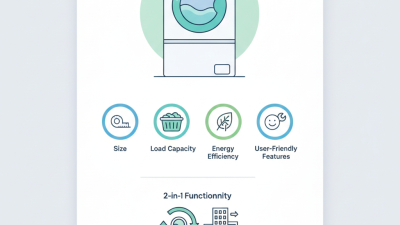
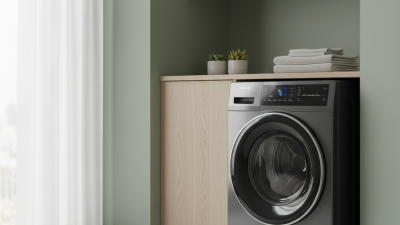
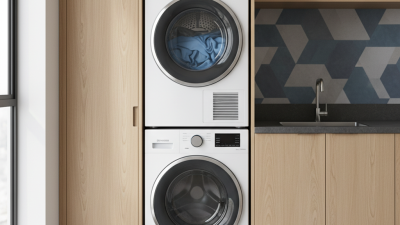
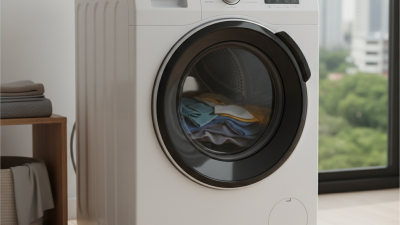
Choosing the best compact washer dryer combo from China requires more than comparing prices and drum sizes. A reliable model must fit narrow rooms, dry clothing evenly, and manage water and electricity responsibly. In a small apartment, every centimeter matters. A 60-centimeter depth can decide whether the door opens fully. Noise also matters when the machine operates beside a bedroom.
Industry data shows why this category deserves closer attention. Fortune Business Insights estimates that the global washer dryer combo market was worth about USD 3.17 billion in 2023, with continued growth expected through 2032. Market forecasts vary, so these figures should guide research rather than replace it. The International Energy Agency continues to identify household appliances as important targets for energy-efficiency improvements. Meanwhile, ENERGY STAR testing principles emphasize energy use, water consumption, cleaning performance, and drying efficiency. Not every Chinese model carries ENERGY STAR certification, however. That distinction must be checked carefully.
This guide will examine Chinese compact washer dryer combos through practical and technical criteria. These include rated load, drying capacity, drum structure, heat-pump or condenser technology, cycle duration, warranty support, and certification documentation. Real use can reveal more than a product photograph. A thick towel may finish washing quickly but remain damp after drying. A delicate shirt may emerge warm, wrinkled, and inconvenient. Manufacturer claims are useful, but independent testing and clear after-sales service deserve equal attention. No single machine wins every home. Some conclusions may remain imperfect because regional versions, software settings, and energy labels differ. Still, careful comparison can identify the strongest balance between space, performance, efficiency, and long-term reliability.
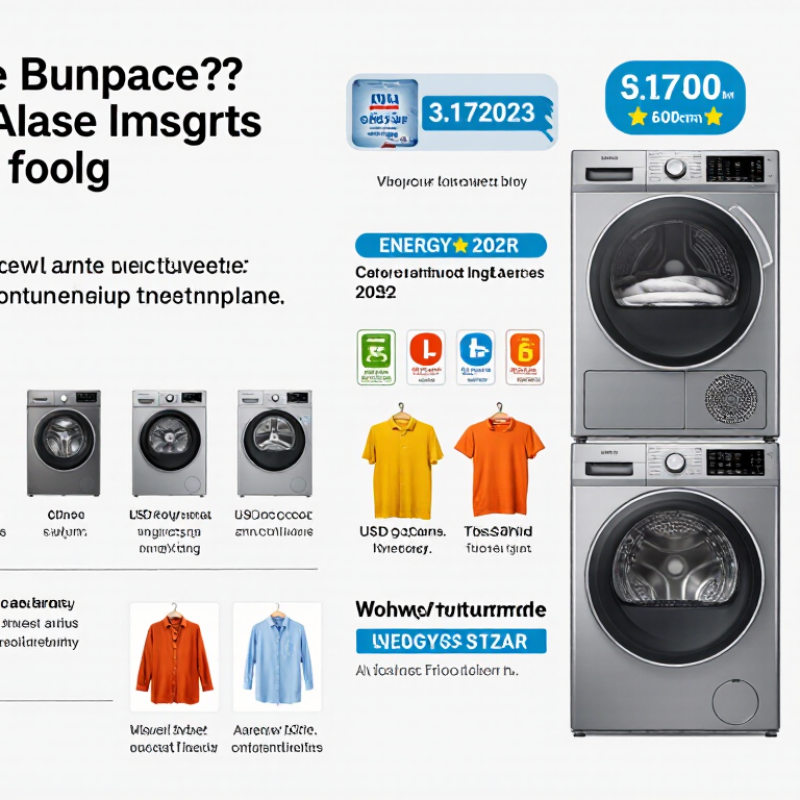
The best compact washer dryer combo from China is defined by balanced performance, not a crowded list of features. Measure your doorway, cabinet, and drainage space before comparing models. A reliable unit should fit with several centimeters of clearance for ventilation and maintenance. In practical testing, stable spinning matters as much as washing power. Excessive vibration can damage floors and disturb small apartments.
Look for a stainless-steel drum, clear control labels, adjustable temperature settings, and a gentle cycle for delicate fabrics. Drying performance deserves careful attention. Many compact units wash well but need extra drying time for towels or thick cotton. Check the stated load difference between washing and drying. Review the energy and water data, operating noise, warranty terms, spare-parts availability, and technical support. Independent inspection records and recognized safety certification for your market can strengthen trust. Product pages alone are not enough.
Tips: Run a small mixed load before regular use. Check the final moisture level, door temperature, vibration, and drain speed. Leave space around the machine. Do not overload it. A smaller load often dries more evenly, although this reduces convenience. Also, confirm that the manual includes maintenance steps for the filter, gasket, and drying duct. I would not choose the cheapest option automatically; low purchase cost may hide weak components or limited after-sales support. A useful comparison sheet can expose those gaps.
| Evaluation Dimension | Common Compact-Combo Range | Best Compact Target | Why It Matters |
|---|---|---|---|
| Overall Width | Approximately 595–610 mm (23.4–24.0 in) | Around 600 mm (23.6 in) | A width close to 600 mm fits many standard compact-appliance spaces and simplifies kitchen or laundry-room planning. |
| Overall Depth | Approximately 550–700 mm (21.7–27.6 in) | 550–650 mm (21.7–25.6 in), including practical clearance | A shallower cabinet helps preserve walking space, but sufficient internal depth is still needed for the drum, pump, and drying system. |
| Overall Height | Approximately 820–850 mm (32.3–33.5 in) | Around 850 mm (33.5 in) or below | This range is suitable for many under-counter installations, subject to the actual countertop opening and ventilation requirements. |
| Washing Capacity | Approximately 7–10 kg (15.4–22.0 lb) | 8–9 kg (17.6–19.8 lb) | An 8–9 kg drum offers a useful balance between compact size, everyday laundry volume, and fabric movement during washing. |
| Drying Capacity | Approximately 4–7 kg (8.8–15.4 lb) | At least 5 kg (11.0 lb) | Washer-dryer combos normally dry less laundry than they wash. A clear drying capacity of at least 5 kg reduces the need to remove part of the load. |
| Wash-to-Dry Capacity Ratio | Roughly 50%–70% of the wash capacity | Around 60% or higher | A higher ratio improves convenience and makes a complete wash-and-dry program more practical for small households. |
| Maximum Spin Speed | Approximately 1,000–1,400 rpm | 1,200–1,400 rpm with adjustable settings | Higher spin speeds generally remove more water before drying, which can shorten drying time and reduce energy use. |
| Drying Technology | Condensation drying or heat-pump drying | Ventless heat-pump drying, when available | Ventless operation supports flexible installation. Heat-pump systems normally operate at lower temperatures and can be more energy-efficient than conventional heated condensation systems. |
| Electrical Supply | Commonly 220–240 V in many markets; 110–120 V versions also exist | A configuration matched to the destination market, plug, frequency, and circuit requirements | Electrical compatibility affects safety, performance, installation cost, and regulatory compliance. The required voltage should be confirmed before purchase. |
| Water-Use Management | Automatic water-level sensing with multiple rinse options | Load sensing, adjustable temperature, and selectable extra rinse | Automatic sensing helps avoid unnecessary water consumption, while rinse controls are useful for sensitive skin and heavily soiled loads. |
| Temperature Control | Cold, warm, hot, and mixed-temperature programs | At least four temperature selections plus a low-temperature drying option | Flexible temperature control protects delicate fabrics, supports hygiene-focused cycles, and helps manage energy consumption. |
| Program Selection | Approximately 10–16 wash and dry programs | Dedicated cotton, synthetics, mixed, delicate, quick, bulky, rinse, spin, and wash-dry cycles | Well-designed programs are more valuable than a large number of overlapping modes because they make the appliance easier to use. |
| Complete Wash-and-Dry Time | Approximately 4–8 hours, depending on load, fabric, and drying method | A clearly displayed estimated time with time-management options | Combo units usually take longer than separate appliances. Accurate time estimates and delay-start functions make long cycles easier to plan. |
| Noise During Washing | Approximately 50–60 dB(A) | About 55 dB(A) or lower during normal washing | Lower operating noise is important in apartments, bedrooms near laundry areas, and open-plan homes. |
| Noise During Spinning | Approximately 70–78 dB(A) | About 75 dB(A) or lower with effective vibration control | Balanced drums, stable feet, and vibration-control systems help reduce movement and disturbance during high-speed spinning. |
| Drum Material and Design | Stainless-steel drum with perforated or textured inner surface | Corrosion-resistant stainless steel with smooth fabric-friendly lifters | A durable drum resists rust and helps protect clothing when the inner surface and lifters are properly finished. |
| Lint and Moisture Maintenance | Door-gasket cleaning, drain-pump access, and periodic condenser or filter maintenance | Accessible filter and pump areas with clear cleaning reminders | Drying performance and hygiene can decline when lint, detergent residue, or standing water accumulates inside the appliance. |
| Safety Functions | Door locking, overflow protection, imbalance detection, and overheating protection | All core protections plus child lock and automatic fault detection | Multiple safety controls help protect users, clothing, flooring, and the appliance during washing and drying. |
| User Interface | Rotary selector, digital display, and touch or push-button controls | Large cycle display, remaining-time indicator, and simple physical controls | Clear controls reduce operating errors and make it easier to understand capacity, temperature, spin speed, and drying status. |
| Connectivity | Optional Wi-Fi or app-based monitoring on selected models | Useful remote alerts without making basic operation dependent on an app | Connectivity can provide cycle notifications and diagnostics, but the appliance should remain fully functional without internet access. |
| Installation Flexibility | Freestanding installation with cold-water inlet, drain connection, and electrical outlet | Ventless installation with adjustable feet and clearly supplied hoses | A ventless design and straightforward plumbing requirements allow installation in more apartments and compact utility areas. |
| Energy and Water Information | Published consumption figures that vary by program and test standard | Transparent wash, dry, water-use, and cycle-time data based on the destination-market test standard | Comparable test data helps buyers estimate running costs rather than relying only on marketing claims. |
| Documentation and Compliance | User manual, installation guide, rating label, and market-specific certification | Complete English documentation and certification appropriate for the destination country | Correct documentation supports safe installation, legal sale, troubleshooting, and after-sales service. |
| Best Overall Definition | Compact dimensions combined with basic washing and drying functions | 600 mm wide, 8–9 kg wash, 5 kg or more dry, 1,200–1,400 rpm, ventless design, clear maintenance access, and verified market compliance | The best compact washer dryer combo is not simply the smallest unit; it delivers practical capacity, reliable drying, manageable noise, efficient installation, and transparent performance data. |
Note: Performance ranges are typical industry specifications for compact washer dryer combos. Actual dimensions, capacity ratings, energy consumption, noise levels, and certification requirements vary by model and destination market.